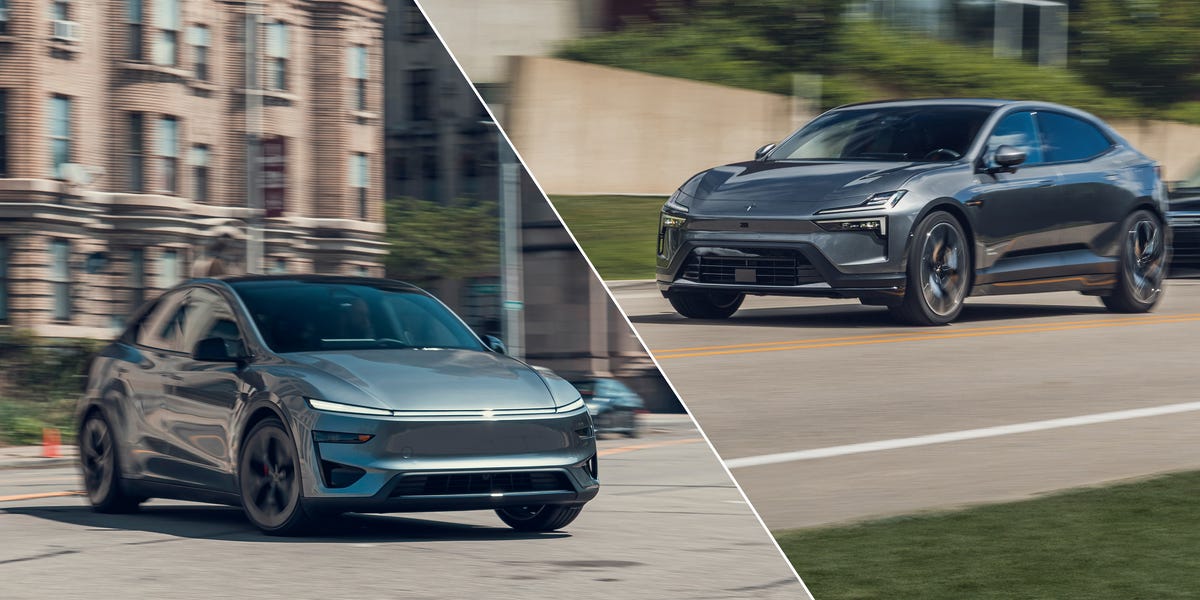
Two automakers with a big experience gap crank up the voltage on their compact electric SUVs. We've reached a point in the electric vehicle evolutionary cycle where the basics are mostly covered, and now there's some room to explore a niche or two.
There's no shortage of small electric SUVs currently on the market, and the luxury subcategory is rife with options, too, but what about something a little spicier? That leads us to this test's central question: What exactly does the word "performance" mean when it's tacked to the end of a compact electric SUV's nameplate? And who does it better?
Our two challengers enter the frame from opposite positions. The Tesla Model Y couldn't be more mainstream—and not just by electric-vehicle standards. It was the bestselling car in the world between 2023 and 2025, cementing itself as the popular choice. In contrast, the Polestar 4 is a segment greenhorn, with 2026 being its first model year.
 View Price on Amazon
The Model Y has always been offered in Performance guise, but with the Y's 2026 refresh came a reinterpretation of the hottest trim's mission objective. The 2026 Model Y Performance has been stripped of some of its previous track-oriented features and is now aimed at pleasing more on winding back roads. Polestar hasn't had the luxury of experimenting with what works and what doesn’t when spicing up one of its electric offerings, so the 4 Dual Motor with the Performance and Plus packs takes things a bit more seriously.
The Tesla's ovoid shape is well familiar at this point, as it hasn't changed much in the eight years since the Model Y's release. Its mostly unadorned body leaves little to talk about, positive or negative. The Model Y's 2026 refresh, which ushered in light-bar-style headlights and taillights, did breathe some life back into its maturing exterior design, but it only takes a glance to figure out which of our two contestants is Generation Alpha.
The Polestar 4's styling is so bleeding-edge that it teeters on the cusp of trying too hard. Its sharp, coupe-like profile is full of creases and acute angles, and while it achieves the Nordic sophistication expected from the brand, there are a few design decisions that probably should have stayed in the prototype phase. We still have difficulty accepting the 4's lack of a rear window.
Both cars exercise purposeful restraint inside, but the Polestar is superior in overall execution. Tesla can take credit for pioneering the techno-minimalist interior aesthetic that is present in both of these vehicles—and the current crop of EVs more broadly—but the Polestar fully realizes the less-is-more approach with its buttery-smooth textures and top-tier materials that create an almost spa-like cabin ambiance.
The tranquil atmosphere was also elevated by some optional extras in our test car, including the $1500 electrochromic glass roof and $3700 nappa leather upholstery.
2026 Polestar 4 Dual Motor Performance Plus: HIGHS: Spa-like interior ambiance, brutal thrust and brakes to match, spacious rear quarters. LOWS: Discordant driving dynamics, touch-control overload, hefty price tag. VERDICT: Would have benefited from some more time in the oven.
While the Tesla's cabin might lack the sensory intrigue of the Polestar, it still offers plenty of room for passengers and cargo. The Model Y's rear seats are comfortable and offer ample legroom, making it a great choice for road trips.
Source: caranddriver.com

