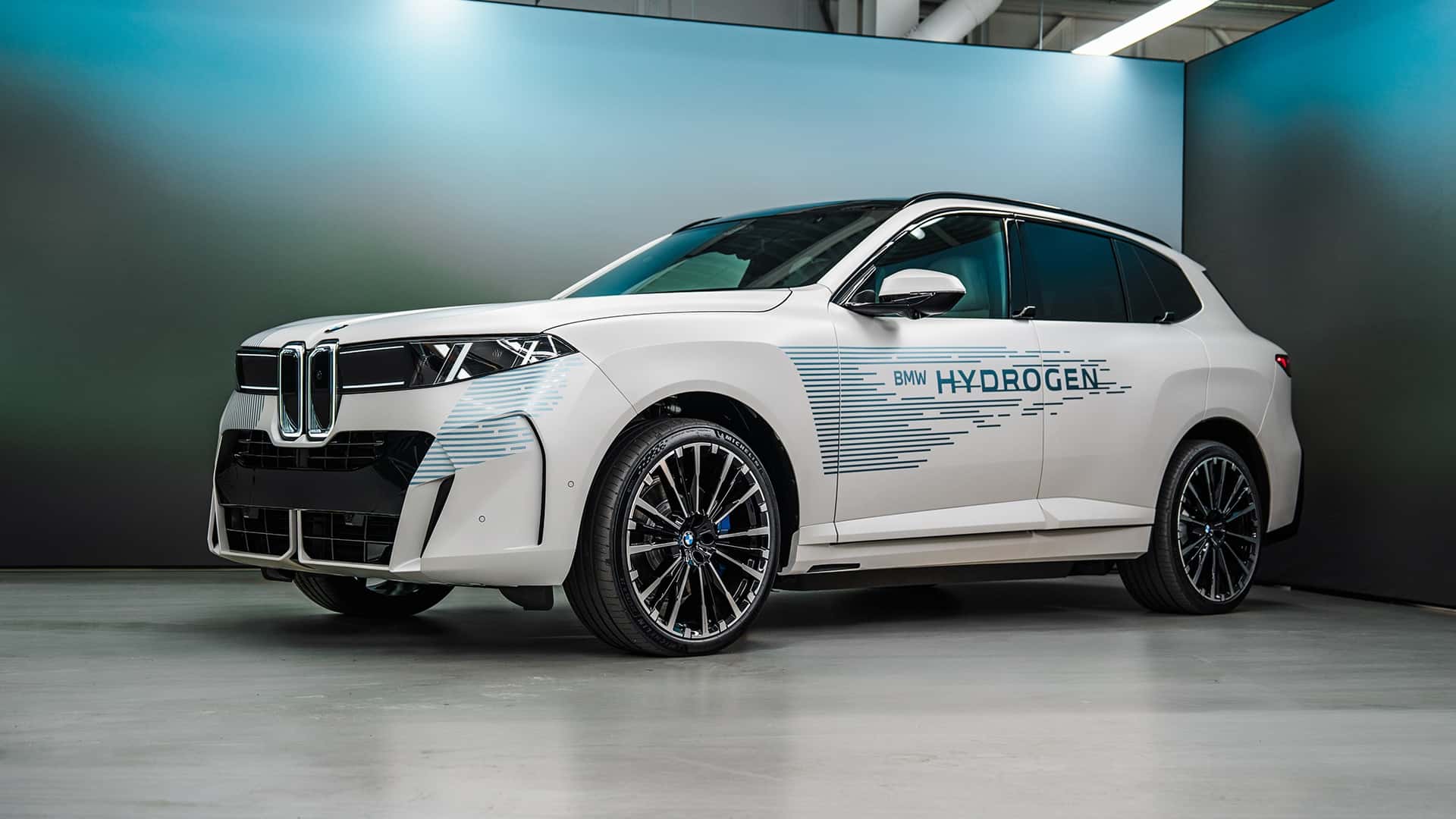
When BMW launched the fifth-generation X5, one particular trim stood out from the rest. A white X5 with blue stripes marked its hydrogen-powered variant, one of the five powertrains the SUV will offer. BMW will first offer the new X5 with hybrid gas and diesel powertrains, plus plug-in hybrid and fully electric options. The hydrogen-powered iX5 will arrive in 2028, the automaker said, without specifying which countries it will be available in.
It's a notable bet on a technology that has long struggled to gain traction. Unlike EVs, which are backed by rapidly expanding public fast-charging networks and increasingly mature supply chains, hydrogen as a fuel source for cars remains largely experimental. Refueling stations are still sparse and concentrated in a handful of markets. In the U.S., for example, all of the 47 publicly available hydrogen refueling stations are in California, according to the Department of Energy. As of last year, more than 80% of the world's hydrogen refueling stations were located in just five countries: China, Japan, South Korea, France, and Germany.
 View Price on Amazon
There are far fewer hydrogen stations than there are gas stations or EV chargers. That's partly why hydrogen-powered EVs like the Toyota Mirai, Honda CR-V e:FCEV, and Hyundai Nexo have struggled to deliver any meaningful sales volumes. So why is BMW still betting on this technology? As renewable energy generation from wind and solar surges, the grid will need more avenues to store that power for when it's actually needed. Grid-scale batteries are already doing much of that heavy lifting, but BMW argues hydrogen is a viable pathway too.
When hydrogen storage becomes more popular, it will eventually spark growth in refueling infrastructure that could support cars, said Philip Koehn, vehicle line director at BMW Group. The hydrogen economy, if and when it develops, will most likely come alongside renewable energies, Koehn told reporters at the X5 launch in Spartanburg, South Carolina, last week. Hydrogen, he added, can store vast quantities of energy.
The logic goes something like this: surplus energy from wind and solar gets converted into hydrogen using electrolyzers, then that hydrogen is stored in tanks. That energy can later be converted back into electricity and deployed wherever it's needed, whether that's hydrogen-powered cars, freight, or industrial applications like forklifts. On the iX5, here’s how the fuel-cell system will work: The vehicle has seven cylinders to store a total of 15.4 pounds of hydrogen. Fuel cells then combine that stored hydrogen with oxygen from the outside air in an electrochemical process that generates electricity to power the motors.
Its fuel-cell powertrain was co-developed with Toyota, which pioneered the technology on the Mirai. BMW said the SUV will deliver up to 400 miles EPA, and refuel about as fast as a gas car, with the hydrogen tank filling up in under five minutes. It will also be the very first all-wheel-drive passenger vehicle powered by hydrogen, BMW said. Both the Hyundai Nexo and the Honda CR-V e:FCEV are front-wheel drive whereas the Toyota Mirai sends power to the rear wheels only.
Source: insideevs.com

