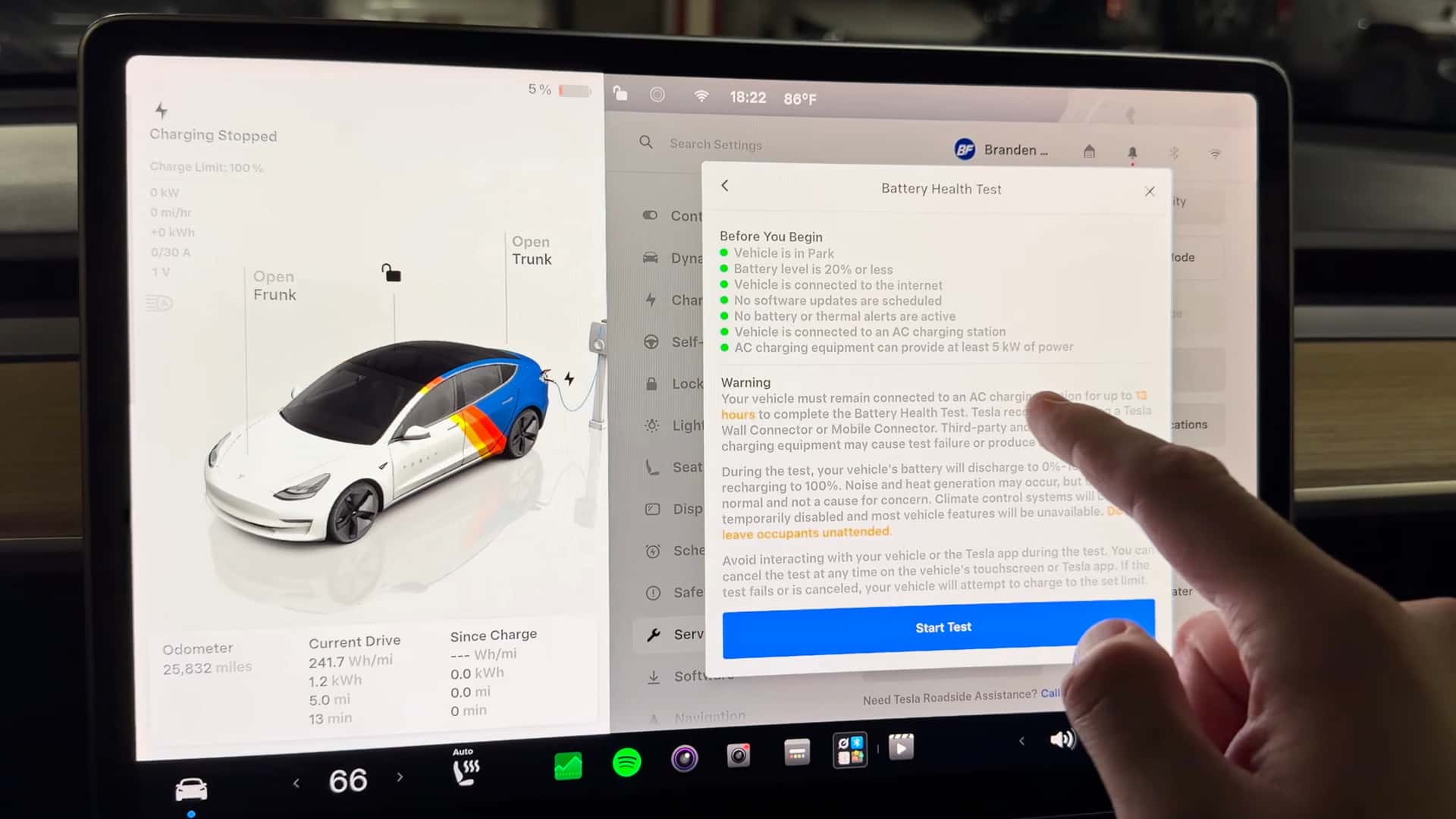
YouTuber Branden Flasch tested the battery health of a rented 2023 Tesla Model 3 Rear-Wheel Drive in Maui, Hawaii. The result was lower than expected, with the car having 90% battery health and a usable capacity of 55.62 kilowatt-hours after 253 charge-discharge cycles. This is pretty low for its age and suggests that its life as a rental accelerated its battery degradation.
Rental cars are often charged to 100% and see a lot of fast charging. This car lived its life in Maui, where the most common public fast charger is still the 50-kilowatt, but there is a 12-stall Tesla Supercharger that can max out the Model 3's charging capabilities, and it could have been regularly charged there.
 View Price on Amazon
The car's actual history is unknown, and Maui is also a very specific use case. It could also have been used for very short trips, left out for prolonged periods, and braved the island's tropical climate. Branden noted that this Model 3 also showed higher-than-average electricity consumption, possibly because the climate system was working extra-hard to maintain the car's interior temperature when it was so warm outside.
However, Branden also compared it with his wife's newer 2025 Model Y Long Range Rear-Wheel Drive, which has a nickel manganese cobalt (NMC) battery. He tested the battery at 88% health with around 13,000 miles. This makes the rental Model 3's result not terrible in context.
Last week, a three-year-old Model Y Standard-Range from Europe, which also had an LFP battery, was tested. It had covered 34,000 miles with 92% of its original capacity, which was also lower than the owner expected for the vehicle's age. However, its rate of degradation seemed to have declined considerably, as it had lost only 1% over the last year.
Source: insideevs.com