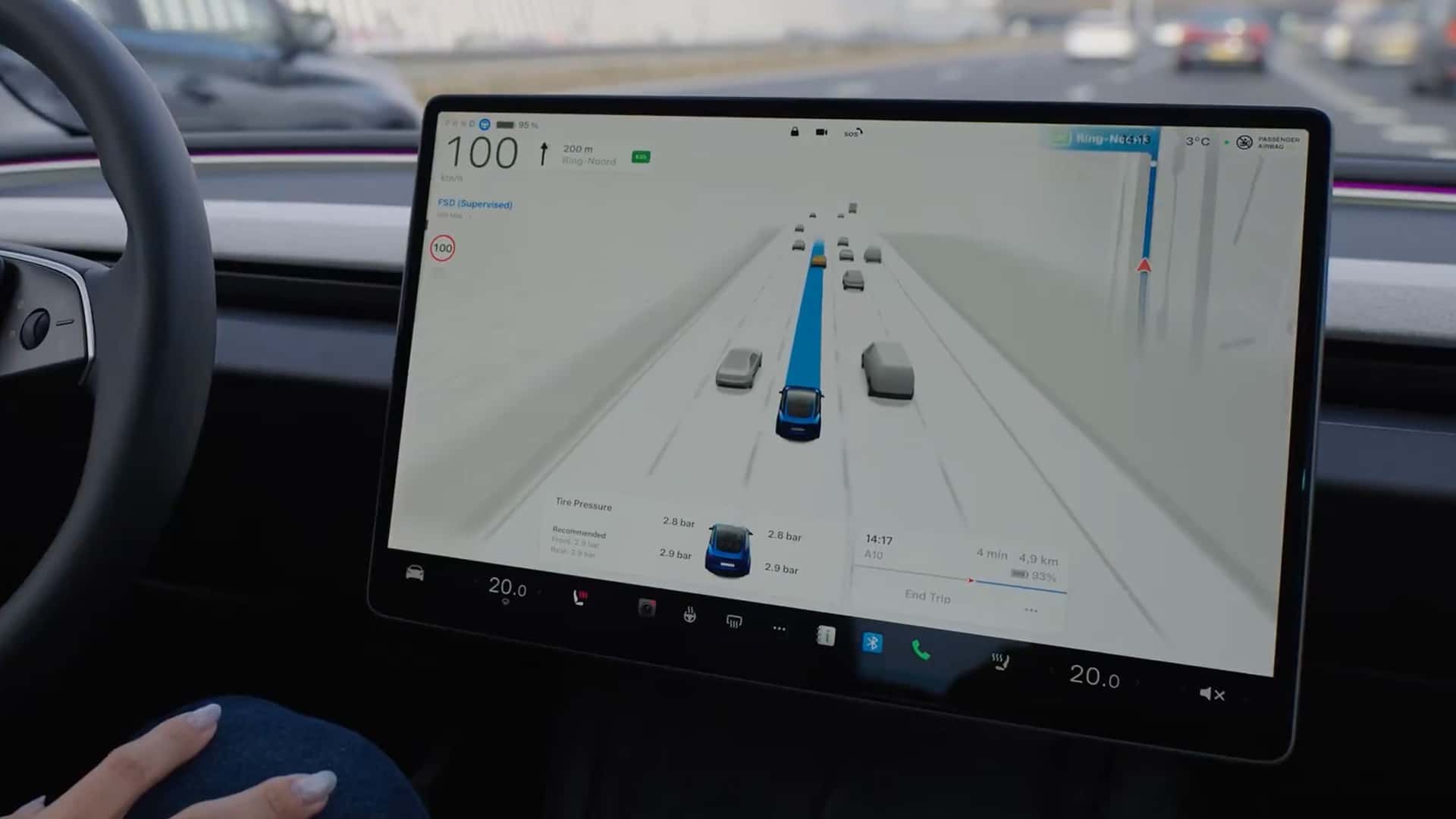
Tesla's Full Self-Driving (FSD) feature has finally reached Europe, with the Netherlands being the first country to grant access to its public roads. However, the expansion of FSD across the continent may be slowed down by concerns over speed limits. The Swedish Transport Administration (TRV) has raised concerns about the 'Speed Offset' function, which allows Tesla cars on FSD to exceed the speed limit.
The regulator has taken issue with this function, citing the risks of undermining the legal framework and the expected safety benefits of vehicle automation. The TRV has sent a letter to the EU's Technical Committee on Motor Vehicles (TCMV) recommending that they vote against the rollout of FSD across the European bloc in its current form.
 View Price on Amazon
The fact that FSD can speed, as well as the system's still untested behavior in winter conditions with heavy snow, are all concerns raised in Europe. The TCMV is set to convene and vote on the matter on June 30, which will decide whether the Dutch transport authority's legalization of FSD can be adopted across the EU. Despite these concerns, Tesla has cleared an important hurdle with the approval of FSD for use on Dutch public roads in April.
Tesla's position on the Speed Offset feature is that while the car is doing the driving, the human driver is ultimately in control of the vehicle and can take over at any time. However, for Sweden, and potentially other countries, this is not a good enough explanation and does not alleviate safety concerns. The version of FSD available on European Teslas already differs from what is available in the United States, with 'Max Speed' and 'Max Speed Offset' settings instead of speed profiles like 'Sloth' or 'Mad Max'.
Source: insideevs.com

