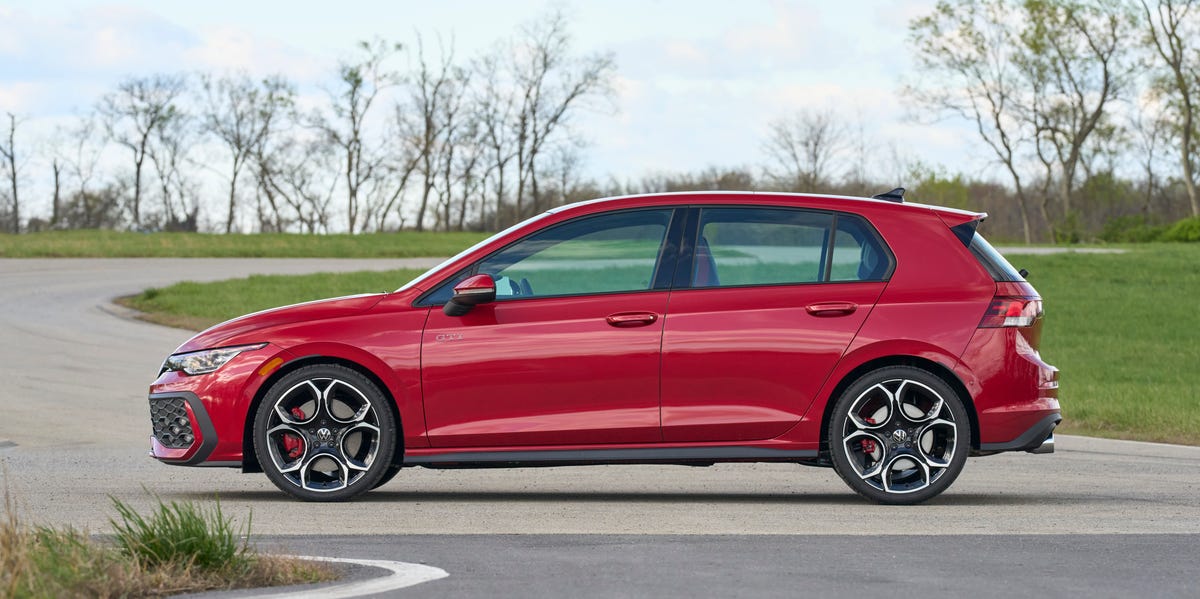
A new study proposes taxing cars based on their dimensions to combat the growing size of vehicles on the road. The proposal is a plan to fight back against the average new car growing around half an inch longer per year. Enthusiasts know all about automotive model bloat. The same trend that caused the current BMW M5 to balloon up by around 2000 pounds over its earliest predecessor has also played a part in the constant increase of length, width, and hood height of all kinds of cars on the road, from larger-than-ever subcompacts to gargantuan workhorse pickup trucks.
But one group in Europe thinks it has a tax-based solution to the problem. As revealed in a study released last week brought to broader attention by Carscoops, the European group Transport & Environment proposes implementing maximum vehicle widths throughout the Continent and altering both tax and parking rates for cars to factor total dimensions into the calculations. Additionally, the proposal includes a suggestion to limit regulatory advantages to electric vehicles smaller than about 13 feet, eight inches.
 View Price on Amazon
The group claims that the average car sold is getting just under half an inch longer every year; the same data suggests that it's also getting two-tenths of an inch wider, taller overall, and taller at the hood line. Those increases collectively lead more energy consumption, fewer parking spaces, and greater risk to pedestrians—all issues that could be, in theory, effectively limited by decreasing the size of the average car in one way or another. If the problem keeps increasing at its current rate, the study suggests that some cities could lose 14 percent of their current street parking capacity alone by 2040.
The group's goal is "right-sizing" in lieu of the current trend of "carspreading," or in other words, using these financial sticks and carrots to push average vehicle size down by 2040. As seen above, the study suggests that under current trends, the average length, width and hood height would reach 14.96 feet, 6.23 feet and 3.04 feet by 2040; using the techniques in their proposal, these could be pushed down instead to so-called right-sized dimensions of 13.93 feet, 5.58 feet and 2.54 feet, respectively. (Those figures, for what it's worth, are within an inch or two of a VW Golf.)
The changes suggested here could be considered drastic, but they also could be what is needed to help fight against the scourge of model bloat. Buyers favoring taller, wider, and longer cars will be hard to win over on the issue, but hey, enthusiasts longing for the days of lightweight sport sedans with short wheelbases might be more flexible on the subject.
Source: roadandtrack.com