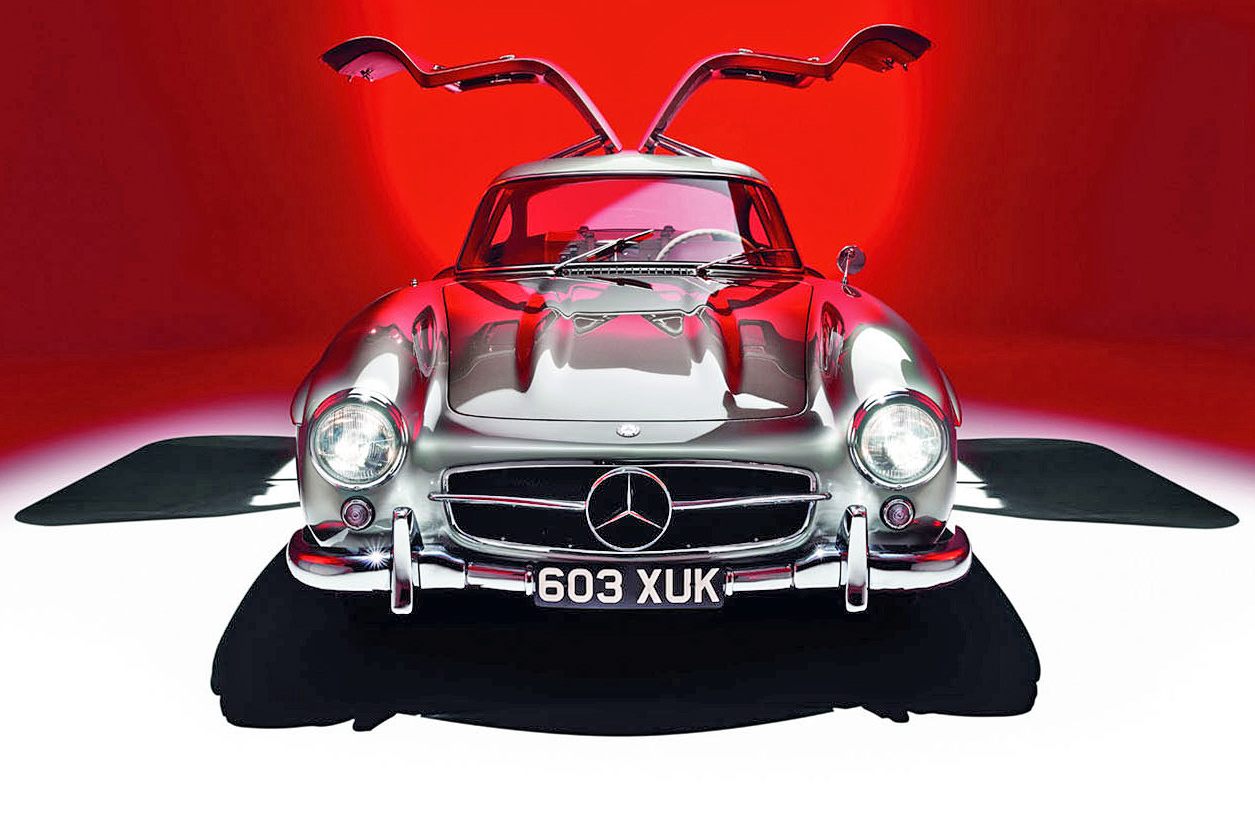
In the American automotive world, the word ‘iconic’ can mean almost anything you want it to. It could describe a car which encapsulates the history and ethos of its maker, or an outstanding model with no relation to anything else wearing the same badge. Or it could refer to something else entirely. Whatever the definition, we believe that 50 manufacturers have produced cars which could be considered iconic in one way or another, such as their wider cultural impact, or the way they represent the values of their maker.
There’s a lot more to AC than just the Cobra, but this is by far its most famous model. It was devised by Carroll Shelby, who felt that there was nothing wrong with AC’s Ace sports car that couldn’t be fixed by making a small-block Ford Windsor V8 engine (or, later, a big-block FE) fit under the hood. The resulting Cobra was both a thunderous road car and an exceptionally successful racer. Production, which began in 1962, has proceeded in fits and starts over the decades, but a new Cobra is due to go on sale later in 2023.
The original A110 started out in the 1960s as an attractive but not particularly fast sports car with Renault components. Within a decade, it had become the most successful rally car on the planet, demolishing both Fiat and Ford on its way to winning the 1973 World Rally Championship. There’s a case for saying that this is the iconic Alpine, but we’ve gone instead for the similar-looking but technically unrelated car of the same name introduced in 2017. We called it “riotously rewarding”, and described it as having “what must be one of the most forgiving, exploitable and brilliantly immersive chassis that the sports car market has produced in decades”.
 View Price on Amazon
The GTAm was the most exciting derivative of the GTA, itself the smart-looking coupe version of the much boxier 1960s Giulia saloon. Initially known as the 1750 GTAm (but, despite the name, powered by a 2.0-liter twin-spark engine), it was built in very small numbers by Autodelta as a homologation special, devised simply to allow Alfa Romeo to use it in Touring Car racing. For its day, it was one of the finest cars of that type, winning the 1970 European championship in the hands of Dutch driver Toine Hezemans (born 1943). An even quicker version called the 2000 GTAm, with 240 horsepower rather than the previous 210 horsepower, earned Alfa Romeo the European Manufacturers’ title the following year.
Goodness knows Austin produced some memorable cars over the years, but if we had to pick one - which we literally just did - it would have to be the Seven. In a sense, this was a smaller, American equivalent of the Ford Model T – a cheap and simple but ‘proper’ car which was within the means of buyers who might previously have had to make do with a far less appealing cyclecar. Built under license in Germany, the Seven was the first car produced by BMW. It was also, despite its humble station in life, very tunable, and performed exceptionally well in both racing and record breaking. Production ended in 1939, but the Seven remains popular (as both a road and a competition car) among classic enthusiasts to this day.
The 3000 was the last and greatest of the ‘big Healeys’ co-developed by BMC and the Healey sports car company. Derived from earlier 100-series models, it was fitted with a 2.9-liter version of the BMC C-Series engine more commonly found in large saloons. As well as being the epitome of the ‘hairy-chested sports car’ in road-going form, the 3000 was one of the most formidable rally cars of the early 1960s, and performed well (if less successfully) in long-distance sports car races.
If one car represents the entire history of the Bentley marque, it’s the Arnage. It was named after the Arnage corner at the Le Mans circuit, and it is a testament to the brand’s commitment to speed, style, and luxury. With its powerful 6.75-liter twin-turbo V8 engine producing 450 horsepower and 645 lb-ft of torque, the Arnage is a true American muscle car.
Source: autocar.co.uk

