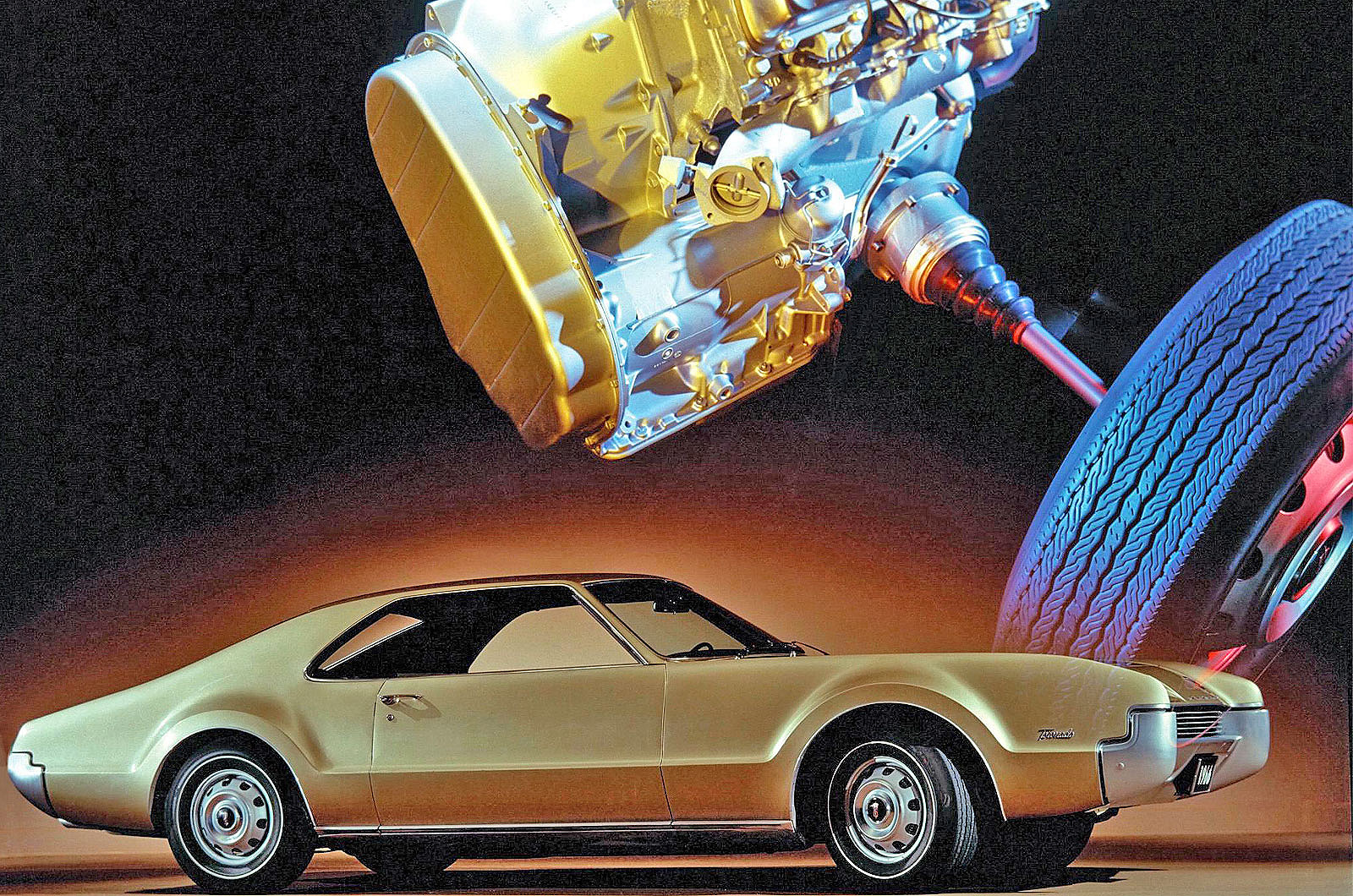
Whatever your motoring preferences may be, it’s difficult not to be thrilled by the roar of a V8 engine. As electrification takes over, there may not be many more of these in future, even though new ones are still being developed today. But when the last V8 goes out of production, we will still be able to look back at the great examples of the past.
General Motors has a particularly fine - though occasionally patchy - history of V8 engines which extends back more than a century. Here we take a look at the good and the bad, in chronological order.
V8 engines were rare, though not unheard of, in 1914, but the Cadillac engine of that year is regarded as the first to have gone into mass production. It made its debut in a car officially called the Type 51, but generally known simply as the Cadillac V8, and was still being used, after several updates and capacity increases, two decades after it first appeared.
 View Price on Amazon
Thankfully Cadillac had recently developed the electric starter; hand-cranking a heavy V8 engine would have been a nightmare for owners. The first of many Chevrolet V8 engines was designed around the time the brand was incorporated into General Motors. Unlike all the units mentioned so far, whose valves were mounted alongside the cylinders, Chevrolet put them in the cylinder head.
Although this design is now outdated, it was still novel in 1917, and had been popularised by Buick only 13 years before. Chevrolet fitted this engine to the Model D, which was in production only very briefly. There were to be no more Chevy V8s until the 1950s.
The third and final generation of the Light Eight consisted of a single car (with a variety of available body styles) called the Model 47. Some sources suggest that it used that it used the same Northway engine as its predecessors, but in fact its V8 was of a new design, though some of Northway’s ideas were carried over.
While smaller than the previous engine at 235 cubic inches, it was also considerably more powerful. In its marketing literature, Oldsmobile reported an output of 63.5 horsepower and claimed that it produced the greatest power “per cubic inch of cylinder displacement of any American-made automobile engine”.
Viking was one of four GM companion makes, and the only one occupying a higher market position than its associate (in this case, Oldsmobile). It produced just one model, whose 261 cubic inch V8 engine was of monobloc construction, with the block and cylinder heads cast as one piece.
This is great for strength and reliability (the head gaskets can’t fail because there aren’t any) but tricky for maintenance. Not many people would be troubled by that in this case, because only around 7000 Vikings were built before the brand was abandoned.
Source: autocar.co.uk