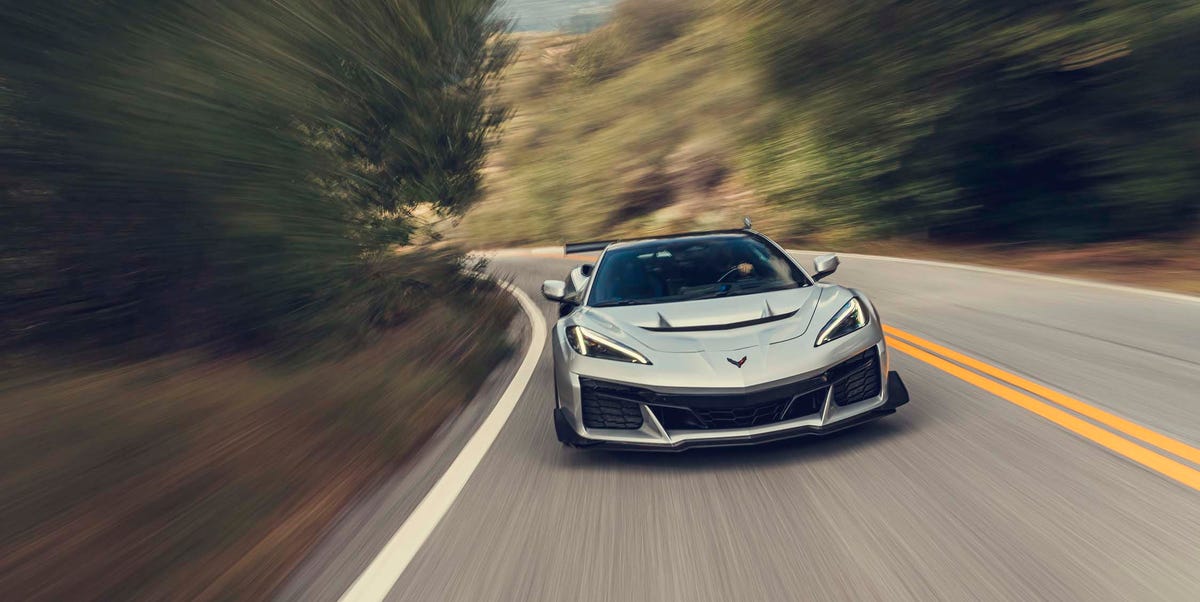
The Chevrolet Corvette has been an iconic symbol of American car culture since its introduction in 1953. With over 70 years of production, the Corvette has evolved significantly, offering quick performance at an affordable price compared to its European counterparts. Our test results from every Corvette since 1955 showcase the remarkable progress made in the automotive industry.
The first-generation Corvette, introduced in 1953, was equipped with a 150-hp "Blue Flame" inline-six engine paired with a two-speed Powerglide automatic transmission. The acceleration was leisurely, with a zero-to-60-mph time of around 11.5 seconds. However, with the introduction of the 265-cubic-inch Turbo Fire V-8 engine in 1955, the Corvette's performance improved dramatically, reaching 60 mph in just 8.7 seconds.
The 1956 Corvette, optioned with twin four-barrel carburetors, produced 225 hp and reached 60 mph in 6.7 seconds. The addition of fuel injection in 1957 further enhanced the Corvette's performance, with the fuel-injected model reaching 60 mph in 6.6 seconds. The 1958 Corvette, despite having 250 fuel-injected horsepower, was a full second slower to 60 mph due to Chevrolet's use of their own test driver.
 View Price on Amazon
The Corvette's march up the horsepower charts continued in 1959, with a model equipped with both fuel injection and a hotter available camshaft producing 290 hp. The 1962 Corvette, with a new 360-hp 327-cubic-inch V-8 option, reached 60 mph in 6.9 seconds with the four-speed manual transmission. The introduction of the Sting Ray name in 1963 marked a significant improvement in the Corvette's performance, with the second-generation model reaching 60 mph in just 5.6 seconds.
Source: caranddriver.com

