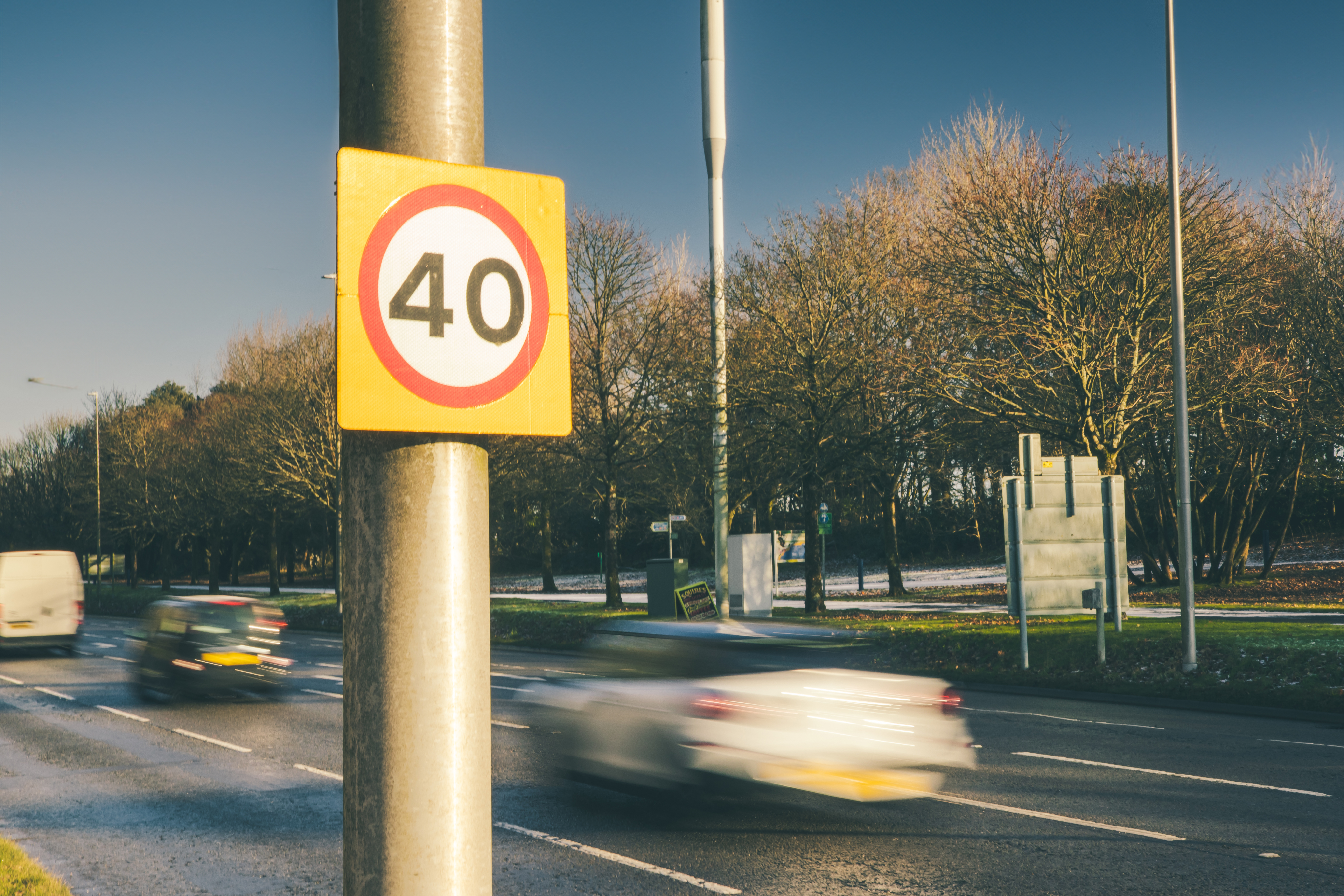
A major US safety body is calling for revisions to the way in-vehicle speed limit recognition technology is tested and approved after its own tests revealed serious inaccuracies. Intelligent speed assist (ISA) is one of a number of safety technologies collectively known as advanced driver assistance systems (ADAS). It has been a mandatory fitment in new cars sold in the United States since 2024.
Using an in-car camera, satellite navigation, electronic map data or a combination of all three, ISA displays the prevailing speed limit and alerts the driver when it changes. In response, the driver can adjust the speed of their car or choose to ignore it. In some vehicles, the system will automatically limit the car’s speed to the new limit, a function the driver can override.
According to charity The Road Safety Trust, ISA helps drivers stay within speed limits and reduces the risk of collisions and injury. To determine the accuracy of ISA systems, the US regulation governing it requires cars to be tested over a combination of roads totaling a distance of 250 miles. To pass the test, the system must recognize the correct speed limit for at least 90% of the traveled distance.
 View Price on Amazon
However, a new program devised by US-based vehicle testing organization Thatcham Research to investigate the performance of ADAS technologies in the real world has found inconsistencies in the performance of the ISA systems in three cars when judged on their performance at each change of speed limit, rather than over distance traveled, as required by the US. It says the three systems are representative of 10% of those in new cars.
Ignoring all system response times of up to two seconds, the worst performing vehicle, an MG ZS, achieved 91.3% accuracy across the driven distance or just above the US’s approval threshold. However, against Thatcham’s performance-based metric, its system was 74.3% accurate. This means that for roughly one in four events, the MG’s ISA displayed the wrong speed limit.
The best-performing vehicle, a BMW i5, scored 98.39% accuracy across the driven distance, comfortably within the requirements of the US regulation. However, its event-based accuracy was 90.3%, meaning that around one in 10 speed limit changes were either incorrectly identified by the system or not at all.
Source: autocar.co.uk

