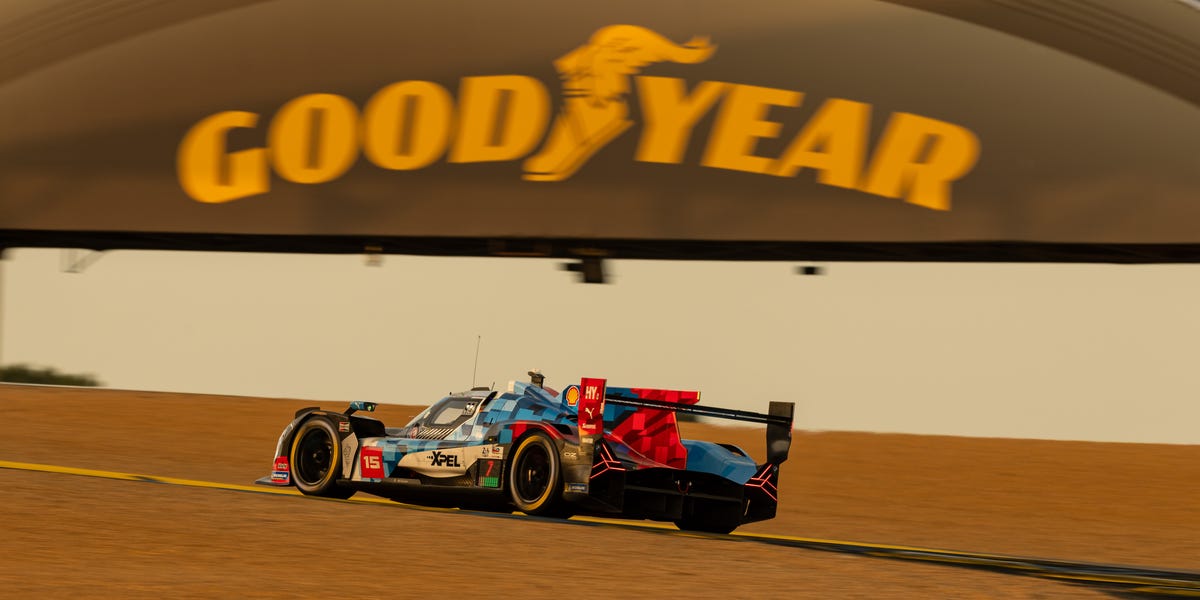
Top-tier sports car racing is about to be more accessible than ever, something worth the cost of the more innovative all-wheel drive hybrids racing today. Since 2023, sports car racing has enjoyed a "Platinum Age" of massive manufacturer participation fueled by the combined rule sets making up the top class at the 24 Hours of Le Mans. Come 2030, those rules are being replaced by a single convergent category. It may seem like a mistake to change things up after four straight years of record factory involvement at Le Mans, but it is a must to keep the momentum going for another generation of cars to come.
Currently, sports car manufacturers can build cars to either an LMDh or LMH rule set. The former allows teams to build their own unique car around a few spec parts, including a standard hybrid transaxle that sends additional electric power to the rear wheels and one of four basic chassis designs from different manufacturers. The latter is far more open, allowing for everything from hybrids sending force to the front wheels as well to create all-wheel drive power to roaring V-12 beasts without any hybrid assistance at all.
Each system has been popular, but the four major manufacturers that have opted for the LMH format have been dwarfed in number by the nine that chose to build LMDh-style cars. Differences in the ways cars actually produce their speed has been a concern too, even as balance-of-performance rules designed to keep cars in the same lap time window are continually adjusted to fix the problem. Most importantly, LMH-style cars have won the 24 Hours of Le Mans in each of the four years that the mixed Hypercar class has raced.
 View Price on Amazon
The new system addresses this issue by doing away with most of the distinctions between LMDh and LMH cars. Teams can still opt to either use common parts or build their own chassis and hybrid components, but organizers are no longer treating cars built from off-the-shelf parts and cars built with bespoke components as distinct rule sets. Manufacturers will be able to mix-and-match to some extent, too; a company planning to use a chassis supplied by a manufacturer could choose to develop its own hybrid system, although it cannot use the spec hybrid system in a chassis of its own design.
Among the biggest changes in the new rule set is the elimination of all-wheel drive hybrids, removing a key advantage to building a car under the current LMH rule set. Cars will have to have at least some hybrid system, removing exceptions that have allowed Aston Martin's Valkyrie to race without one. Standardized diffusers will reduce differences between cars too, but organizers are offering manufacturers more freedom to alter aerodynamic elements outside of those sections in return.
Both power and weight targets are being bumped up, but the cars are expected to have similar pace to existing Hypercar entries. Cars are set to be homologated for five years and, because brands will not have access to the many development exceptions currently available to keep cars continually updated almost every year, designs should stay locked in for that entire cycle.
The new rule set has been agreed upon, but not finalized, by both the U.S.-based IMSA and the ACO, the organization that hosts the 24 Hours of Le Mans and sets the rules for the FIA World Endurance Championship. That means the two series will continue to share a top class going forward, as they have since the LMDh and LMH convergence in 2023. Crossover between the two has been limited, but BMW, Cadillac, and Aston Martin notably field full factory efforts in both series.
Source: roadandtrack.com