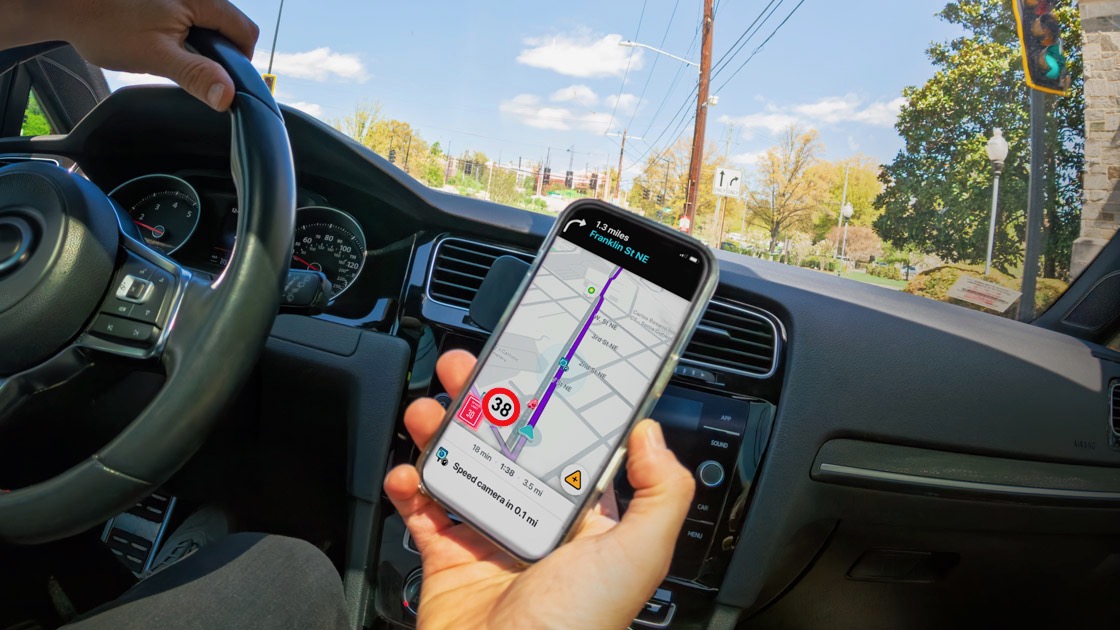
Driving while speeding and using a cellphone are two of the most prevalent and perilous behaviors on America's roads. While both are known to increase accident risk, a new, eye-opening study from the Insurance Institute for Highway Safety (IIHS) reveals they're not just dangerous in isolation—they're often partners in peril, particularly as speeds climb.
For years, safety experts operated under the assumption that drivers were most likely to engage with their phones at slower speeds, perhaps in stop-and-go traffic or at red lights. However, data compiled from innovative safe-driving apps offered by insurance companies has shattered this belief. "Data from insurance companies’ safe-driving apps show that, in free-flowing traffic, the opposite is true," stated IIHS president David Harkey, underscoring a significant shift in understanding driver behavior.
Unprecedented Insights from Insurance Apps
This groundbreaking study leveraged a wealth of "more nuanced information" than previously available, thanks to millions of data points collected from drivers who opted into insurer-backed safe-driving programs. These apps utilize a smartphone's integrated sensors—GPS for speed and location, gyroscopes for phone rotation, and accelerometers for hard braking/acceleration—to paint a comprehensive picture of real-world driving habits.
Researchers meticulously analyzed nearly 600,000 individual trips taken between July and October 2024 across most U.S. states. To focus specifically on free-flowing traffic, only journeys lasting at least 18 minutes with significant interstate highway time were included, and periods of driving significantly below the speed limit were excluded from the analysis.
The Alarming Link: Speed & Phone Use
The findings are stark: for every additional 5 mph a driver exceeded the speed limit on limited-access highways, cellphone use jumped by a staggering 12%. On other types of roads, while still present, the increase was a more modest 3% for every 5 mph over the limit—likely due to the need for more frequent driver interaction with traffic lights and intersections.
Furthermore, the study observed that phone use was consistently higher on roads with greater posted speed limits. On 70-mph limited-access highways, the increase in phone use per 5 mph over the limit was 9% greater than on similar roads with a 55-mph limit. Similarly, on other roads, a 45-50 mph limit saw a 3% larger increase in phone use compared to 25-30 mph zones, escalating to a 7% larger increase on 55-mph limit roads.
Find a Reliable Car Phone Mount on AmazonWhy the Dangerous Duet?
The IIHS speculates on several potential factors contributing to this dangerous correlation. Drivers who are inherently more prone to taking risks may simply apply that same mindset to multiple unsafe behaviors. Stress, previously linked to both increased phone use and speeding, could also play a significant role. Finally, the perceived "simpler" conditions of higher-speed, limited-access roads—fewer pedestrians, no stoplights—might lead drivers to believe it’s a safer opportunity to grab their phones, despite the inherent dangers of higher speeds.
It's also worth noting that while many modern vehicles offer sophisticated smartphone integration like Apple CarPlay and Android Auto, these systems don't necessarily prevent drivers from directly interacting with their handheld devices, bypassing safer, integrated options.
Tackling the Problem: Challenges and Recommendations
In light of these findings, the IIHS suggests a critical adjustment to public safety campaigns: integrating anti-speeding messaging with warnings about distracted driving. Addressing both behaviors in tandem could be more effective than separate, isolated campaigns.
However, implementing solutions presents its own set of challenges. While speed cameras offer a potent (if controversial) tool against speeding, enforcing anti-phone rules, especially on high-speed highways, remains difficult for law enforcement. And ironically, the very insurance apps that provided the data for this study, designed to promote safer driving through premium incentives, do not appear to effectively deter this high-speed phone use.
The study serves as a stark reminder that while technology advances, driver behavior remains a complex and critical frontier in road safety. Understanding these interconnected risks is the first step toward developing more effective strategies to save lives.
Shop Hands-Free Car Kits on AmazonSource: thedrive.com