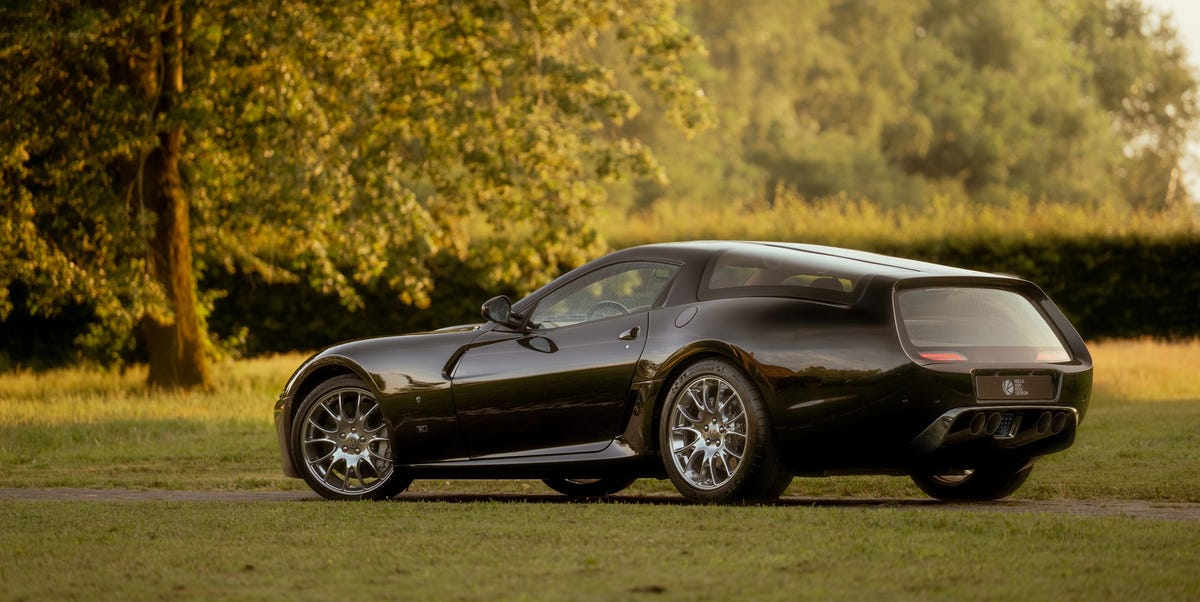
Niels van Roij Design specializes in custom shooting brakes, and this Ferrari 599-based creation has a longroof design with sweet butterfly windows. The shooting brake is a difficult form to master. A cross between a coupe and a wagon, the combination of the swept-back sports-car stance and a longroof silhouette has produced some of the most fetching designs of all time—see the Volvo 1800ES—and also some of the oddest, like the BMW M Coupe that earned the nickname "Clown Shoe" for its ungainly proportions.
Thankfully, the newly revealed Daytona Shooting Brake Hommage, falls into the former group with svelte bodywork and delicate ornamentation. Built by Dutch coachbuilder Niels van Roij Design, the car is a tribute to the 1972 Ferrari Daytona Shooting Brake. One of the most stunning one-offs ever produced, the 1972 car was commissioned by Luigi Chinetti, the three-time Le Mans winner who later founded the North American Racing Team that successfully campaigned privateer Ferraris in F1 and sports car racing in the '60s and '70s.
 View Price on Amazon
The modern interpretation by Niels van Roij Design is incredibly faithful to the original. Although the company doesn't outright state it, the car appears to be based on a Ferrari 599. The body is crafted entirely from aluminum, with only the doors left untouched, and the overall shape is smooth and sinuous. The front end features slim headlights linked by a full-width amber graphic element that swoops up and over the silver Daytona badge, echoing the orange strip that helped distinguish the 1972 original from other Ferrari Daytonas.
Below sits a wide grille with chrome trim, giving the front end a look reminiscent of the Chrysler Firepower concept from 2005. The pièce de résistance, however, comes towards the rear, where the elongated roof reveals a flourish with electronically operated butterfly windows that swing upwards on exposed aluminum hinges to provide access to the luggage compartment. This feature is inspired directly by Chinetti's original shooting brake, but the subtle curvature of the rear haunches here lends the rear canopy an extra level of elegance.
The sloping roof culminates in an abrupt Kammback design, with a pane of glass set into the bodywork, behind which sit the taillights. Four prominent exhaust outlets protrude from the bumper below. The cabin clearly shared its overall structure with the 599, but Niels van Roij Design has made significant changes. The biggest difference is that every gauge and dial is now mounted in the center of the dashboard, leaving a clear, open view ahead for the driver, another element borrowed from the original 1972 car.
Brown leather upholstery and carbon-fiber trim provide a luxurious yet sporty vibe. In terms of the powertrain, Niels van Roij Design simply mentions a front-engined V-12 setup, so we presume the 6.0-liter engine has been left untouched and still churns out a tad over 600 horsepower, sent to the rear wheels via a six-speed automated manual.
Source: caranddriver.com

