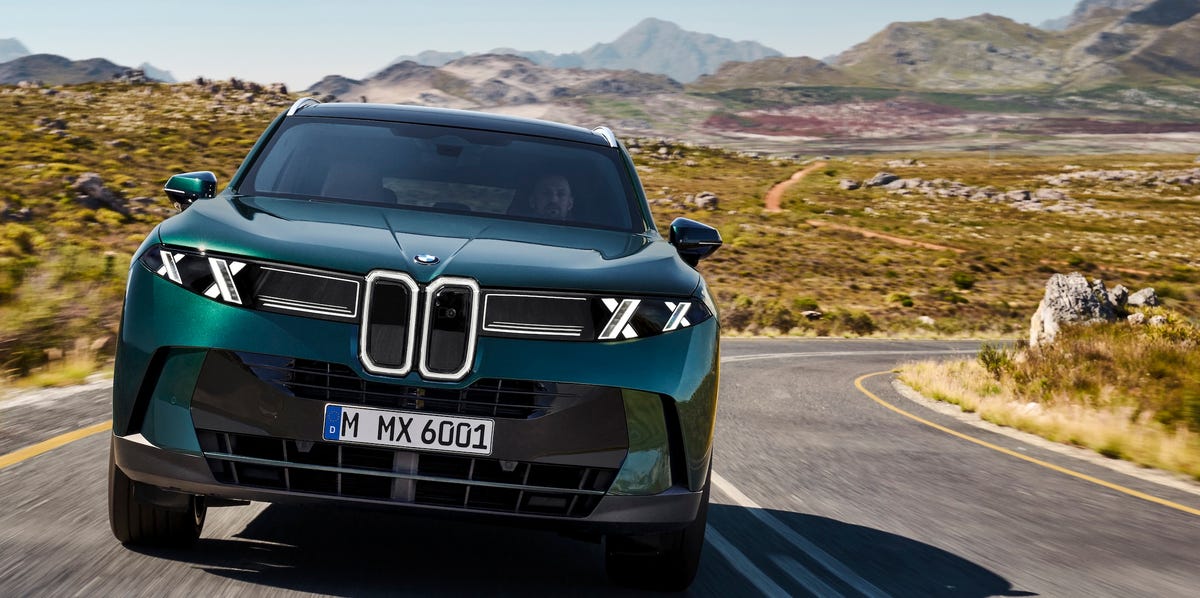
The new BMW X5 is set to revolutionize the automotive industry with its innovative approach to powertrains. With five different powertrain options available, the X5 is poised to dominate the global market, which is currently dominated by crossovers and SUVs. The X5 lineup is a crucial part of BMW's business plan, serving over 120 markets worldwide. To accommodate the various powertrains, BMW has adopted a "technology agnostic" approach, ensuring that the vehicle can adapt to different markets and regulations.
The concept of offering multiple propulsion options is not new to the X5. The upcoming 3-Series is expected to offer both electric and combustion powertrains. However, the new X5 takes it to the next level by sharing the same architecture across all versions, with concessions in place to adapt 48-volt mild hybrids, plug-in hybrids, pure electrics, diesel engines, and a hydrogen fuel cell powertrain. These powertrains will be divided among various markets based on local needs and regulations.
 View Price on Amazon
"Electrification has taught us a lesson that relying on governmental regulations, subsidies, and so on, can be unpredictable. Hence, the technology agnostic approach is the way forward, at least for a company that wants to be a successful premium manufacturer," said Phillip Koehn, vehicle line director for BMW Luxury Class, Rolls-Royce, and BMW Alpina models. The company is confident that this approach will protect it from the volatility in the automotive regulatory space.
The new X5 offers customers the flexibility to choose from a range of powertrains, including a 3.0-liter turbocharged inline-six engine that produces 335 horsepower and 331 lb-ft of torque. The X5 xDrive40i can go from 0-60 mph in just 5.3 seconds. The X5 xDrive50i, on the other hand, features a 4.4-liter twin-turbo V8 engine that produces 523 horsepower and 553 lb-ft of torque, going from 0-60 mph in 4.1 seconds.
Source: roadandtrack.com

