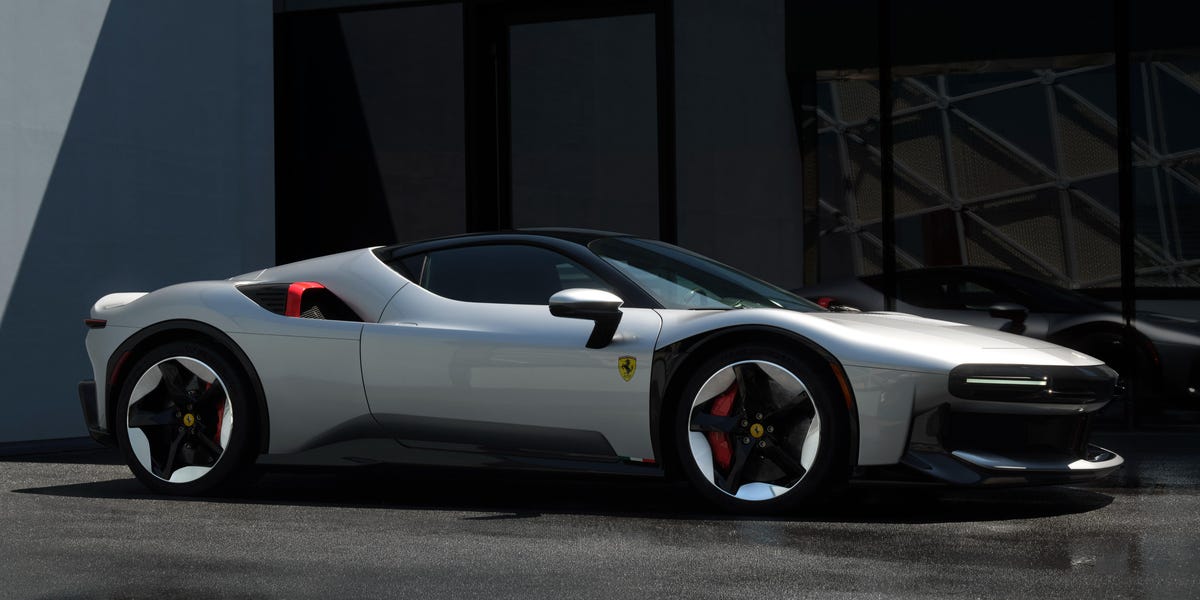
Ferrari debuted its latest custom project during Monterey Car Week. The Ferrari one-offs have no quit, so it’s little surprise that the Prancing Horse revealed yet another example of what it can do given a blank check at this year’s Monterey Car Week. Say hi to the Ferrari CZ26.
Based on the SF90 Stradale, this berlinetta features a totally new design aesthetic while retaining the SF90’s hybrid powertrain. That means it still has a twin-turbo V-8 paired with three electric motors and a nominal electric range of approximately 15 miles should you plug it in.
The real story here, though, is the new Prancing Horse’s design. Ferrari calls the look a “technical design language.” The overall theme is one of horizontal elements, which starts in front with the full-width grille that houses new horizontally-opposed LED lights. Hidden in the grille element are brake air intakes and sensors for driver assistance items.
 View Price on Amazon
Color is a vital part of this design, as flashes of Rosso Lampante (red) emphasize the technical parts of the car. The red vertical openings on the front hood, intakes on the rear fenders, and red calipers all stand out proudly against the Argento Veloce the rest of the car is painted in.
Out back, the rear taillights are thin LEDs cantilevered out from the body itself. The titanium exhaust tips sit in a familiar place when compared to the SF90, though the exit surround has the same boxy, horizontal aesthetic as the rest of the car.
Ferrari describes the overall design as a two-box look, with the cabin distinctly separated from the rest of the vehicle. The wheel arches surrounded in black also proudly stand alone, emphasizing the muscular nature of the fenders. Even the wheels themselves are unique to the CZ26, and feature a gloss black finish with a “shot-peened surface treatment” in an effort to give the black paint a polished-like finish.
Move inside, and while most of the interior is black, the Rosso Lampante accents continue onto the seats. The technical fabric used for upholstery is a new look for Ferrari, and the seat inserts themselves were produced using additive manufacturing. Even the carbon fiber trim is specific to the CZ26, as Ferrari weaved metallic filaments into its structure.
Source: roadandtrack.com