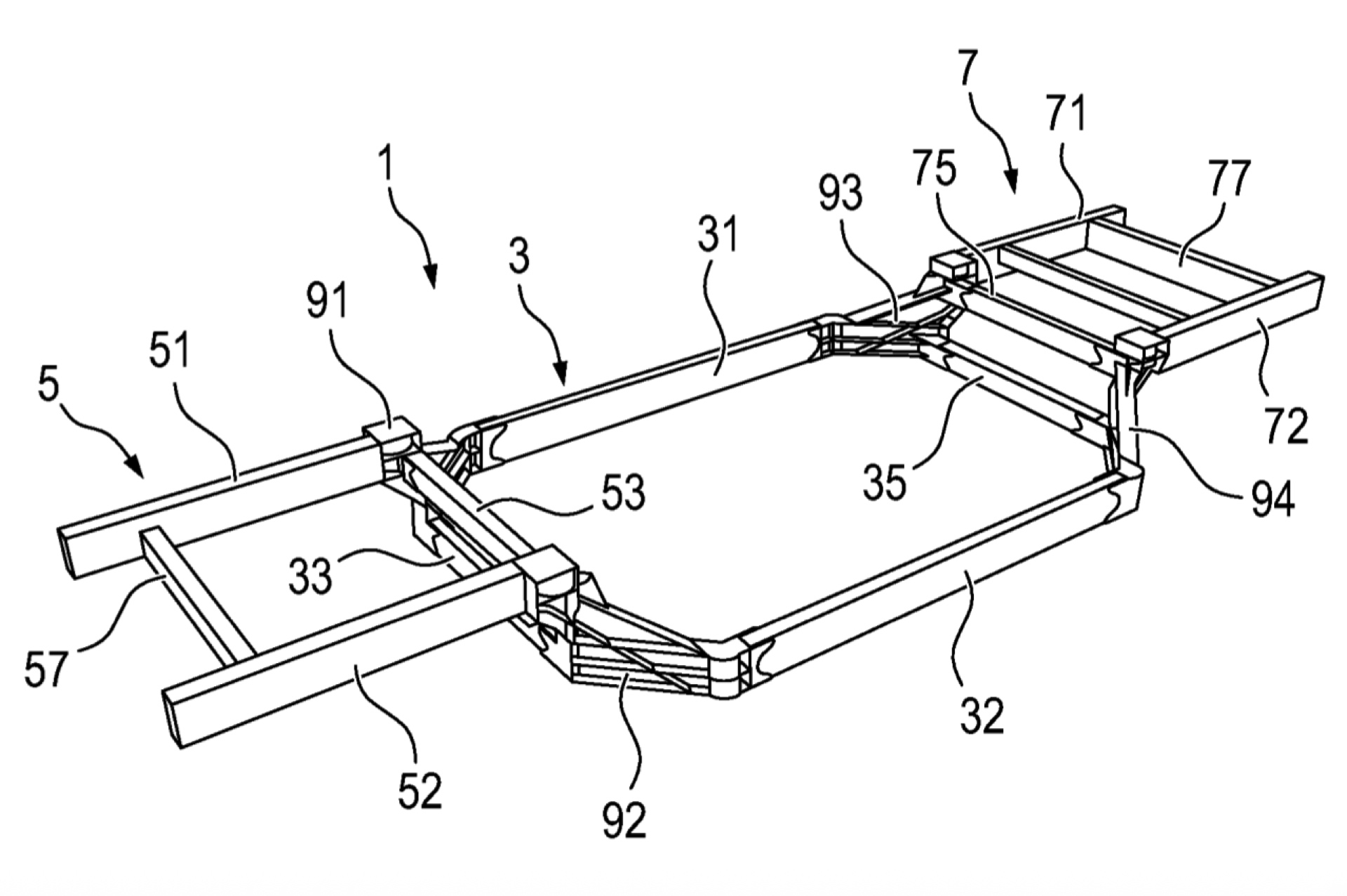
BMW, renowned for its diverse lineup of X-models from the compact X1 to the flagship X7, including the electric iX and performance-oriented XM, is far from done innovating. A recent patent application, discovered by CarBuzz and filed with the German Patent and Trademark Office (DPMA), reveals a surprising new direction: a highly sophisticated ladder frame design. This unexpected move suggests BMW might be looking to expand into segments traditionally dominated by rugged off-roaders and pickups.
The patent, identified by file number DE 10 2024 130 768.4, was initially filed in 2024 but won't be publicly disclosed until late April 2026. This forward-looking design significantly evolves and refines the conventional ladder frame concept, which is typically found in heavy-duty vehicles. Had it not offered substantial advancements, a new patent would, of course, not have been possible.
According to the application, BMW's patented ladder frame is designed for exceptional scalability and cost-effective manufacturing. Its comparatively simple architecture allows for various components, such as the diagonally opposite connecting elements between the underbody and the front/rear sections, as well as the front and rear cross members, to be identically constructed. This modularity means individual profiles can be cut from long beams, making vehicles based on this platform remarkably easy and inexpensive to scale – allowing for the addition or reduction of several inches in both length and width without requiring changes to the core connecting elements.
Beyond traditional steel and aluminum, the patent explicitly mentions the possibility of using fiber-reinforced plastics, such as carbon fiber, for its cross and longitudinal members. Even more notably, the document directly addresses the ladder frame's suitability for electric vehicles (EVs), detailing the potential for integrating drive batteries and electric motors. Intriguingly, there is no mention of conventional internal combustion engines, suggesting a strong EV-centric future for this platform.
 View Price on Amazon
While the patent remains broad on specific models or series, it clarifies the self-supporting frame is primarily designed for passenger cars. The patent document states it's suitable for a wide array of vehicle types, including “sedans, SUVs, wagons, compacts, hatchbacks, convertibles, etc.” This remarkable flexibility means the ladder frame could, in principle, be as adaptable as BMW's current CLAR WE cluster architecture.
Crucially, this patented design is far from a “low-tech” solution. The blueprints clearly indicate that state-of-the-art powertrain and chassis components can be mounted onto its standardized and scalable basic structure. This advanced approach means the patent shares little with the classic image of a simple ladder frame, moving well beyond its traditional use in less demanding segments.
This revelation immediately brings to mind the long-rumored “BMW Rugged” project (G74), which has been consistently speculated as Munich's answer to formidable off-road bestsellers like the Mercedes-Benz G-Class and Land Rover Defender. The robust, scalable nature of this new ladder frame would perfectly suit such an ambitious venture. However, it's also possible that BMW is merely securing intellectual property rights without immediate plans for a series production vehicle, meaning we might not see a ladder frame BMW on the road in the mid-term. Regardless, this patent is a clear indicator that BMW's future could be far more diverse and adventurous than we currently imagine.
Source: bimmertoday.de

